
What Is Content? A Guide to Creating and Sharing It
Table of Contents
What is content? Content is any message delivered to a targeted group of readers, customers, or business stakeholders. It can take the form of text, audio, video, or multimedia graphics. More specifically, content serves as the primary communication method for companies to explain the benefits of their products, services, or ideas to potential customers and existing clients.
The definition of content extends beyond simple text on a webpage. Content represents information created and shared to inform, educate, entertain or persuade a specific audience. When businesses strategically create and publish this material, the practice is called content marketing. This approach involves developing a series of messages that guide prospects through each stage of the buyer’s journey—from initial awareness through consideration and finally to the purchase decision.
Quality content remains the foundation of effective digital marketing. From blog posts and social media updates to email newsletters, infographics, case studies and video tutorials, content appears in numerous formats, each serving distinct business purposes. Understanding what content is—and how to use it effectively—determines whether your marketing efforts generate real business results or add to digital noise.
However, not all content delivers value. Only well-researched, optimised material cuts through the clutter to reach and engage your target audience. This requires an integrated approach that includes thorough research, structured creation using proven frameworks, continuous assessment and improvement, strategic repurposing and thoughtful distribution across owned, earned and paid channels.
This comprehensive guide examines what effective content means for businesses operating across the UK, Ireland and Northern Ireland. You’ll discover strategic insights from digital marketing professionals, alongside practical frameworks and operational processes for creating content that accelerates meaningful business outcomes. Whether new to content marketing or looking to refine your existing strategy, this guide provides the clarity and direction needed to make content work for your business.
Understanding Content: Definition and Core Concepts
The definition of content extends beyond simple text on a webpage. Content represents any information created and shared to inform, educate, entertain or persuade a specific audience. This includes written articles, social media posts, videos, podcasts, infographics, presentations and interactive tools.
According to Heidi Cohen, content is “high-quality, useful information that conveys a story presented in a relevant manner with the goal of seeking an emotion or engagement.” When used for marketing purposes, it should incorporate the organisation’s branding, remain free from overt promotion, and include a trackable call to action.
Content in Communication
Content functions as the substance of any communication. In digital marketing, content serves multiple purposes: building brand awareness, educating potential customers, addressing pain points, demonstrating expertise and guiding prospects towards purchase decisions.
For businesses, content acts as a scalable sales tool. Well-crafted content works continuously, reaching audiences across different time zones and platforms without additional per-contact costs.
Content Profile and Context
Your content profile encompasses all the material your organisation creates, maintains and distributes. This includes blog posts, website pages, social media content, email campaigns, downloadable resources and multimedia assets.
Understanding the context in which your audience consumes content proves equally important. A detailed LinkedIn article serves different purposes than a quick Instagram caption. Business decision-makers might prefer comprehensive reports, while social media users engage more with visual content and concise updates.
Benefits of Content Marketing for Business Growth
Strategic content marketing delivers measurable advantages for businesses of all sizes. These benefits extend beyond simple visibility to create lasting competitive advantages.
Improved Demand Generation
Demand generation uses marketing tactics to drive interest in a company’s offerings. During demand generation campaigns, businesses use content to inform prospects of problems they might not have recognised.
Content highlights how specific products or services provide solutions for customers with identified challenges. Infographics and white papers serve as particularly effective demand generation tools for leads in the early stages of their buyer’s journey.
Building Brand Recognition
Content helps businesses communicate their values, offerings, and unique positioning in the marketplace. This material must maintain consistent messaging across all channels to build strong brand recognition.
Challenges arise when companies serve multiple customer segments. In these situations, businesses must create personalised content that speaks to different demographic groups while maintaining brand consistency.
Driving Website Traffic
Quality content attracts visitors searching for information on specific topics. Search engines, including Google, Bing and Yahoo, continuously update their algorithms to reward high-quality material, which results in better search rankings and increased organic traffic.
Valuable content gets shared more frequently across social channels. Research indicates that consumers face information overload, with attention spans shorter than ever. Prospects are likelier to engage with content that trusted contacts or colleagues recommend.
Engaging Audiences on Social Channels
Modern marketing requires meeting customers where they spend time. Decades ago, this meant print newspapers and television advertisements. Now, it means engaging prospects through social media platforms.
Social media communication adds a personal dimension to marketing efforts because conversations happen authentically, interactively, and in real time. Content designed for social sharing encourages dialogue and builds community around your brand.
Scalability Across the Buyer’s Journey
Quality content can be adapted and reused throughout the customer lifecycle. Videos and infographics that attract early-stage prospects can be combined, modified and repurposed as webinars that move qualified leads further through sales.
Similarly, a series of blog posts can be compiled into an ebook offered as a free download, transforming individual pieces into comprehensive resources that serve different stages of customer engagement.
Establishing Industry Expertise
Well-researched articles, blog posts and white papers help establish authors and their organisations as industry authorities. Companies that consistently demonstrate expertise attract more customers both online and offline.
For example, a digital agency providing guides on website optimisation, SEO and AI implementation builds credibility and positions itself as an expert in these areas. This expertise becomes a key differentiator when potential clients evaluate service providers.
“Content isn’t just about filling web pages—it’s about providing genuine value that addresses real business challenges. When you understand your audience’s needs and deliver solutions through strategic content, you create opportunities for meaningful engagement that drives actual business growth,” notes Ciaran Connolly, Director at ProfileTree.
Content Marketing Examples from Leading Brands
Examining successful content marketing implementations helps illustrate effective strategies in action.
Patagonia’s Environmental Advocacy
Patagonia built its brand around adventure travel and exceptional quality outdoor clothing. After establishing this reputation, the company published content highlighting its commitment to environmental responsibility and social causes.
Patagonia’s marketing team recognised that their target customers value quality outerwear, stunning destinations and environmental stewardship. The company now publishes a blog featuring customer adventures, many written by environmental activists. This user-generated content platform allows Patagonia to amplify environmental messages while strengthening customer relationships.
Best Buy’s Demand Generation Campaign
Best Buy executed an effective demand generation campaign targeting customers in the pre-awareness stage for smart home technology. Many know home automation products exist, but struggle to keep pace with rapid technological developments.
Best Buy created advertisements showing practical applications of smart home technology, such as the Samsung Family Hub refrigerator. These campaigns demonstrated how technology solves everyday problems, creating awareness of needs prospects didn’t previously recognise.
Lego’s Sustainability Communication
Lego built its reputation on fun, educational toys. The company used press release content to inform consumers about its move towards bio-plastic materials derived from sugar cane rather than petroleum-based plastics.
This content targets environmentally conscious parents who want to make sustainable purchasing decisions. By communicating environmental values through content, Lego moves consideration-stage prospects closer to purchase decisions.
Developing a Content Marketing Strategy
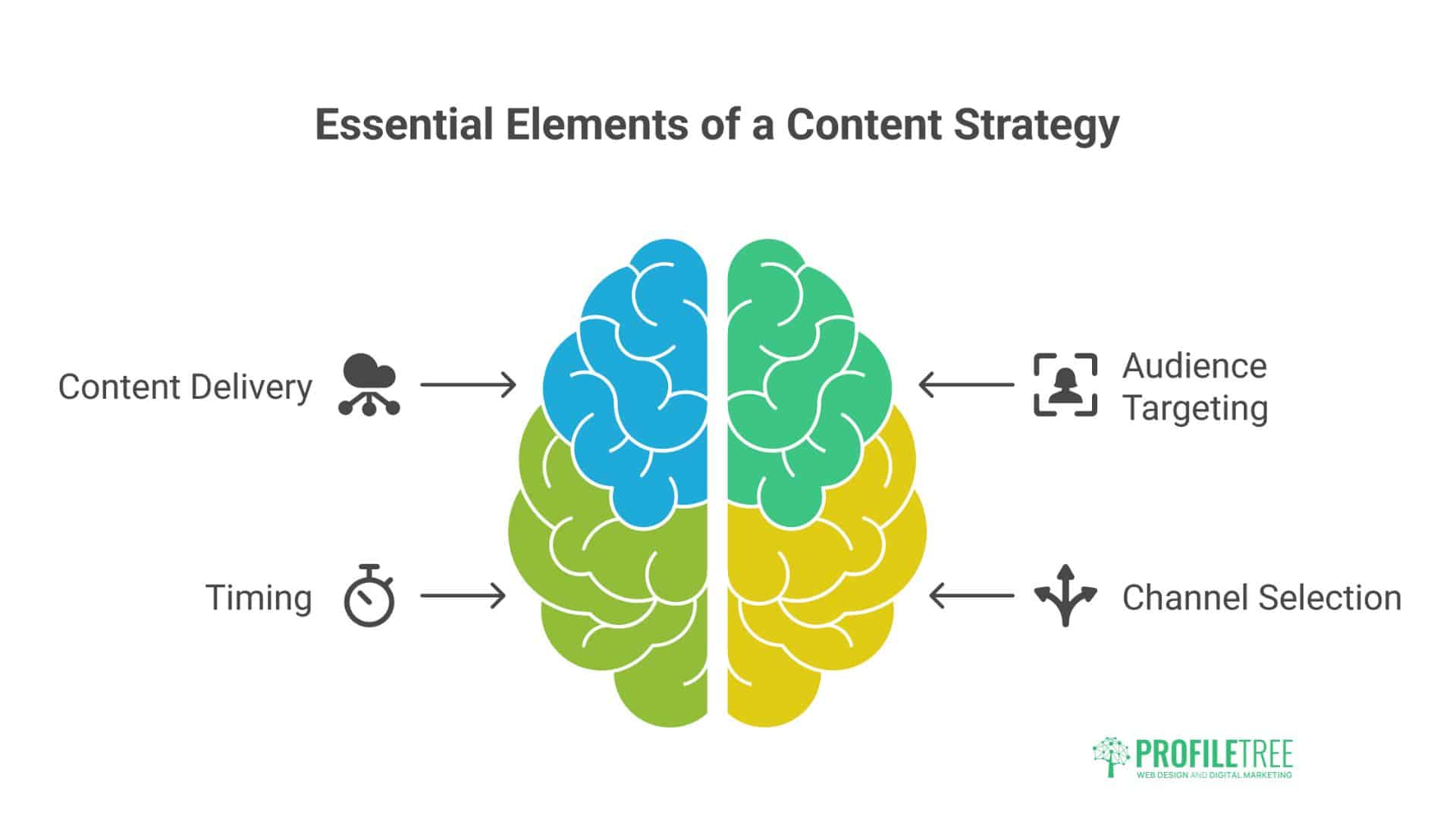
Creating a content marketing strategy helps confirm that the right content reaches the right audience at the right time through appropriate channels. Effective strategies contain several key components.
Defining Your Brand Story
A brand story depicts your company’s values, benefits, and market perceptions. This includes your brand’s tone and personality, which should remain consistent across all communications.
Brand stories explain why companies serve particular customers and how they differ from competitors. These narratives guide content creation and can be used to maintain positive brand reputation or reshape perceptions of an underperforming brand.
Creating Buyer Personas
Content effectiveness suffers when authors don’t understand their audience. Identifying your ideal customer or buyer persona provides structure for content marketing efforts.
Well-defined buyer personas allow you to create content that aligns with prospects’ values, behaviours and attitudes. This customer insight also guides marketing managers towards appropriate distribution channels for different content types.
Conducting Market Research
Since content marketing depends heavily on understanding customers, ongoing research proves necessary. This research includes survey feedback, sales data analysis and social media monitoring.
Market researchers also identify trends and potential risks in different industries. The data collected during research projects informs decision-making about content marketing campaigns and overall strategy adjustments.
Mapping the Buyer’s Journey
Matching buyer personas with relevant content isn’t sufficient. Most content marketing strategies aim to increase revenue, which requires precision in content delivery.
A prospect repeatedly expressing interest through email subscriptions may be receptive to more detailed content, leading to a sale. Marketing managers wouldn’t engage such prospects with high-level blog posts since their interest has already been established.
Assessing Current Content Assets
Content marketing managers often inventory existing content during strategy planning. This helps avoid duplicating existing content while identifying opportunities to repurpose or modify material for distribution channels.
An organised plan for content deployment helps marketing managers send consistent, effective messages to leads. This structure results in prospects receiving applicable content when they need it most.
ProfileTree’s Approach to Content Strategy
At ProfileTree, we develop content strategies that support your broader digital marketing goals. Whether you need content to support SEO campaigns, enhance social media presence or establish thought leadership, our approach integrates with your overall business objectives.
Web Design and Content Integration
Your website serves as the foundation for your content marketing efforts. We design websites with content in mind, creating structures that support blog posts, case studies, video content and downloadable resources. Our WordPress development expertise means your content management system remains user-friendly whilst supporting technical SEO requirements.
SEO-Focused Content Creation
Content and SEO work hand-in-hand. We create material optimised for search engines and human readers, focusing on keywords that matter to your business and maintaining natural, engaging language. Our local SEO expertise proves particularly valuable for businesses targeting customers across Northern Ireland, Ireland and the UK.
Video Production and Content Diversification
Video content continues to grow in importance. Our video production services help you diversify your content mix, creating engaging visual material that complements written content. Video adds a powerful dimension to your content strategy, from product demonstrations to customer testimonials and educational content.
AI Implementation for Content Operations
Artificial intelligence is transforming content creation and distribution. We provide AI training and implementation services that help businesses adopt these technologies responsibly. This includes using AI for content ideation, draft generation, optimisation, and performance analysis while maintaining the human oversight necessary for quality and authenticity.
Digital Training and Skill Development
We offer digital marketing training that covers content strategy, creation and distribution. These sessions help your team develop the skills to maintain consistent, high-quality content output. Our training covers practical topics including content planning, SEO basics, social media strategy and content performance measurement.
Content Formats and Examples
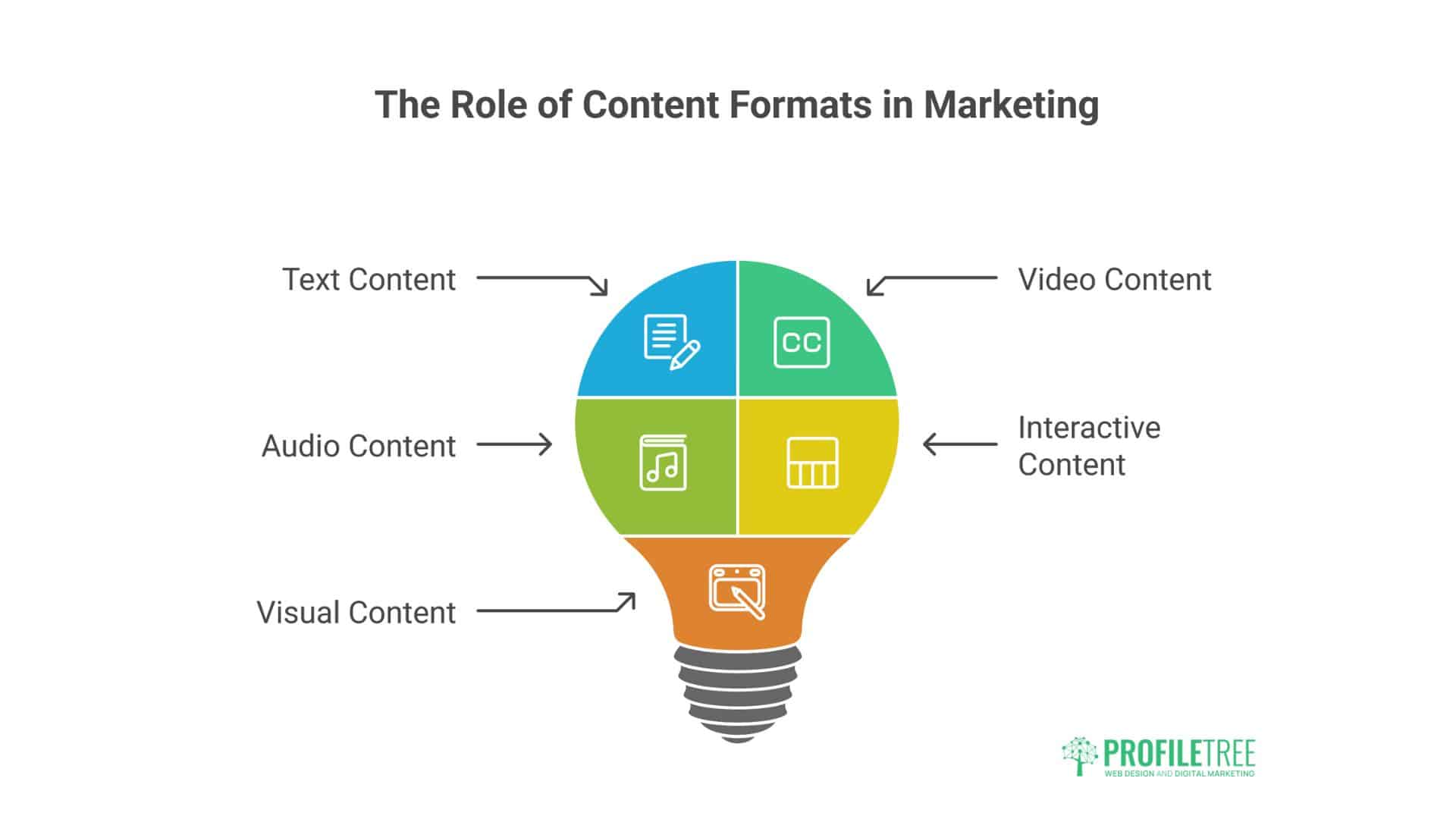
Different content formats serve different purposes across the buyer’s journey and various marketing channels.
Text Content
Written content remains the most common format, including blog posts, articles, ebooks, white papers, case studies, guides, newsletters, emails, social media posts and reviews. Text content works well for detailed explanations, thought leadership and search engine optimisation.
Example applications include educational blog posts that attract organic search traffic, detailed guides that establish expertise, and email newsletters that maintain engagement with existing contacts.
Video Content
Video includes live action and animated content—product demonstrations, customer testimonials, explainer videos, interviews, commercials and virtual events. Video content proves particularly engaging and shareable across social platforms.
Video effectively demonstrates products, explains complex concepts visually, builds emotional connections, and captures attention in social media feeds.
Audio Content
Audio content includes podcasts, radio segments, speeches, and interviews. This format often focuses on education or entertainment and works well for audiences who consume content while commuting or multitasking.
Audio content helps build deeper connections with audiences through voice and personality, whilst offering convenience for busy professionals.
Interactive Content
Quizzes, assessments and calculators capture data, qualify leads, educate users and encourage sharing. Interactive content utilises psychological principles to drive engagement.
Interactive elements work particularly well for lead generation, audience segmentation and providing personalised value based on user input.
Visual Content
Infographics, charts, diagrams and data visualisations present information in easily digestible visual formats. Visual content gets shared frequently and helps explain complex information quickly.
Visual elements prove valuable for breaking up text content, presenting data findings and creating shareable social media assets.
Content Development Process
A structured approach to content development helps maintain consistency and quality across all your content marketing efforts.
Planning Phase
Define clear goals, identify target audiences, select appropriate content types, determine optimisation priorities and establish a production workflow based on available resources. Planning prevents wasted effort and keeps content aligned with business objectives.
Research Phase
Conduct thorough research using customer data, industry thought leaders, existing content analysis and relevant news events. Comprehensive research provides the foundation for authoritative, valuable content.
Creating Outlines
Map out sections, establish logical sequencing, estimate word counts and identify sources to cite. Detailed outlines maintain consistency and help multiple team members contribute to larger content projects.
Drafting Content
Writers create initial drafts aligned to outlines and tone guidelines. This phase transforms research and planning into actual content assets.
Editing and Refinement
Review content to improve writing quality, optimise for search engines, verify facts and finalise material through multiple iterations. Editing separates good content from great content.
Formatting and Enhancement
Add graphics, embed media, design visual layouts and incorporate interactive elements. Proper formatting improves readability and engagement whilst supporting technical SEO requirements.
Promotion and Analysis
Distribute content across web properties, email lists and social media channels. Track engagement data to understand what works and refine future content based on performance insights.
Ongoing Evaluation Through Analytics
Content marketing managers use data analytics to measure campaign effectiveness. Establishing a regular evaluation schedule means managers can quickly correct flawed assumptions, saving both time and budget.
Regular analysis reveals which content types, topics and formats resonate most with your audience. This data informs future content decisions and helps optimise resource allocation.
Best Practices for Content Marketing
Following established best practices improves content performance and helps avoid common pitfalls.
Copyright and Content Licensing
Always confirm that cited works are distributed legally with proper permissions. Use Creative Commons-licensed assets where possible. Consider registering original content for additional protection.
Working with Freelance Writers
When hiring freelance content creators, look for strong portfolios, subject matter expertise, experience with various content types, positive client testimonials and clear communication skills. Quality freelance writers prove invaluable for scaling content production.
Repurposing Existing Content
Reformat and adapt evergreen content for new channels and contexts. Transform blog posts into social media series, extract video clips for advertisements and localise content for different markets. Repurposing maximises the return on content creation investments.
Determining Content Length
Optimal length depends on content type and placement, but prioritise quality over quantity. Use data on audience engagement times to inform length decisions. Some topics require comprehensive treatment, whilst others work better as concise pieces.
Personalisation
Using customisation, relevant user data and one-to-one communication significantly increases response rates. People engage more with tailored messaging that speaks directly to their specific needs and interests.
Content Promotion Strategies
Creating excellent content represents only half the challenge. Effective promotion determines whether your content reaches its intended audience.
Owned Channels
Your website, blog and email contacts offer direct channels for promoting new content. Use email newsletters, website pop-ups and homepage banners to drive attention to new material.
Organic Discovery
Improve search engine visibility through optimisation, including metadata, alt text, relevant linking, and keyword integration. Organic discovery provides sustainable, long-term traffic growth.
Social Media Distribution
Share content natively or through paid promotion on platforms including Facebook, Instagram, LinkedIn, Twitter and Pinterest—access defined audiences by interests, demographics and behaviours. Create visually compelling posts that encourage sharing.
Paid Advertising
Supplement organic efforts with paid promotion to accelerate reach and target specific audience segments. Paid campaigns work particularly well for launching new content or reaching cold audiences.
Content Marketing for Different Business Types
Content strategies vary based on business model, industry and target audience.
B2B Content Marketing
Business-to-business content often focuses on demonstrating expertise, explaining complex solutions and building trust over longer sales cycles. White papers, case studies, webinars and detailed guides work particularly well for B2B audiences.
B2C Content Marketing
Business-to-consumer content typically emphasises emotional connections, lifestyle benefits and quicker purchase decisions. Social media content, user-generated content, video, and influencer partnerships often prove effective for B2C brands.
Local Business Content
Local businesses benefit from content that targets specific geographic areas. This includes location-specific blog posts, local event coverage, community involvement stories and content optimised for local search terms.
Service-Based Business Content
Companies selling services rather than products need content that demonstrates expertise and builds trust. Educational content, case studies, client testimonials and thought leadership articles work well for service providers.
How ProfileTree Supports Your Content Marketing
Content marketing works best when integrated with your broader digital strategy. ProfileTree offers comprehensive services that support every aspect of content marketing:
Website Development: We build WordPress websites optimised for content marketing, with user-friendly content management systems and technical foundations that support SEO.
SEO Services: Our SEO expertise helps your content rank higher in search results, driving organic traffic and leads. We focus on national and local SEO for businesses across Northern Ireland, Ireland and the UK.
Content Strategy: We develop comprehensive content strategies aligned with your business goals, audience needs, and competitive landscape.
Video Production: Our services create engaging visual content that complements written material and performs well across social platforms and YouTube.
AI Training and Implementation: We help businesses adopt AI tools for content creation, optimisation, and distribution while maintaining quality standards and brand voice.
Digital Marketing Training: Our training programmes help your team develop content marketing skills, from strategy development through creation and performance measurement.
Content marketing delivers stronger results when it becomes part of an integrated digital strategy. ProfileTree works with businesses to develop holistic approaches that combine great content with strong websites, effective SEO and strategic distribution.
Moving Forward with Content Marketing: What is Content?
Content marketing represents a long-term investment in business growth. Whilst results may not appear overnight, consistent effort produces compounding returns over time.
Start by defining clear goals for your content marketing. What specific outcomes do you want to achieve? Who are you trying to reach? What problems can you help them solve? These foundational questions guide all subsequent content decisions.
Develop a realistic content calendar that you can maintain consistently. Regular publication matters more than occasional bursts of activity. Even one high-quality piece per week, maintained over time, builds significant authority and traffic.
Track your results and refine your approach based on what the data reveals. Learn from both successes and failures to continuously improve your content marketing effectiveness.
Content marketing works best when integrated with other digital marketing activities. Great content supports SEO, provides material for social media, nurtures email subscribers and strengthens your overall brand presence.
Whether you’re just starting with content marketing or looking to improve existing efforts, ProfileTree can help. From strategy development and content creation through technical implementation and performance measurement, we provide the expertise to make content marketing work for your business.